
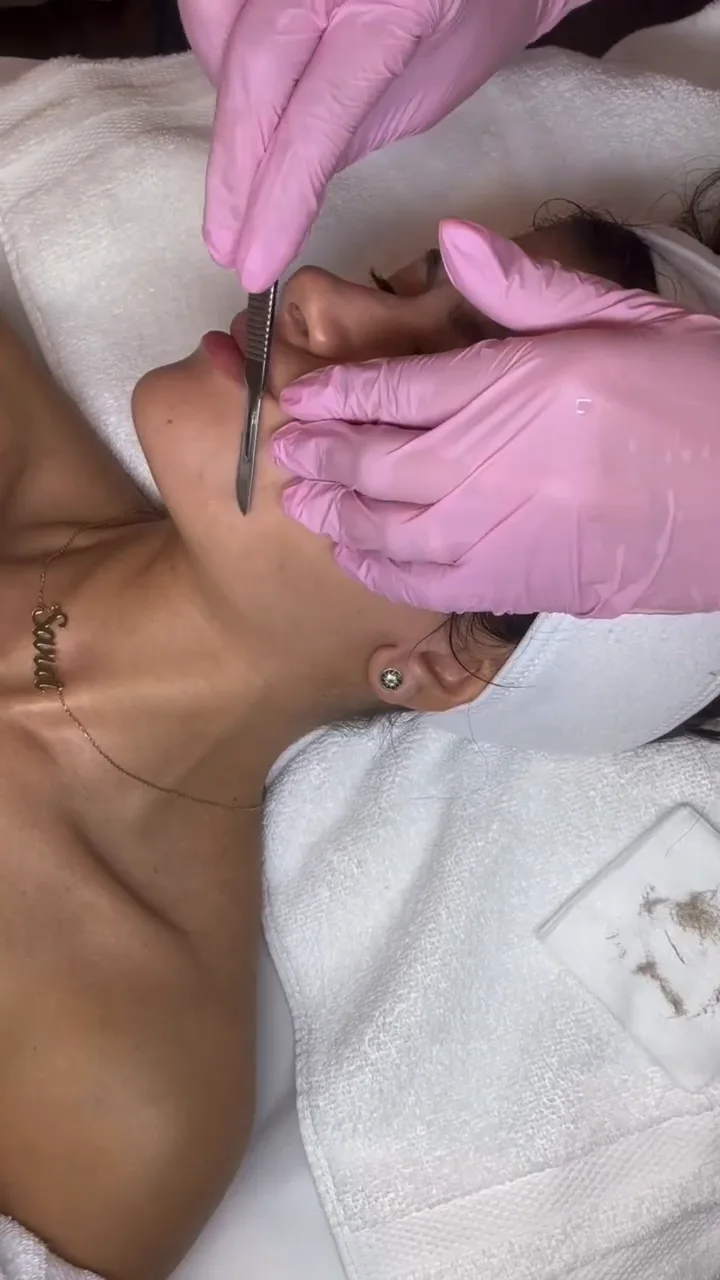
One layer less,
and the light comes back.
Dermaplaning is a gentle mechanical exfoliation that lifts away dead cells and the fine hair on the surface, for smoother, more luminous skin and better product penetration.
No credit card and no commitment. The session itself takes about 30 to 45 minutes.
Makeup catches, and your cream just sits on top.
Skin loaded with dead cells reflects less light and lets less of what you apply get through. It isn't a product problem: it's a surface layer that needs to come off.
What comes off, and what that changes.
Results vary from person to person and are not guaranteed.
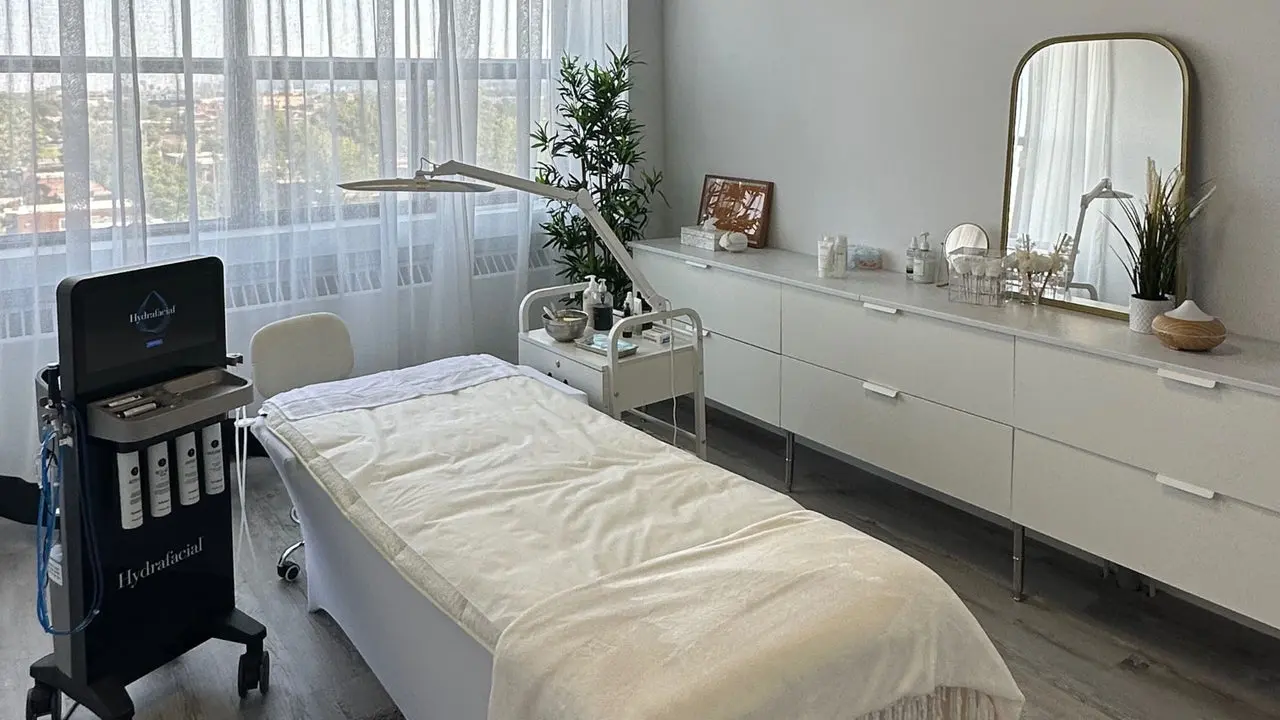
Lame stérile à usage unique
No machine here: using a dedicated instrument, the skin's surface is gently exfoliated, pass after pass. It's a hand technique, performed by a trained esthetician.
Three steps, and you leave ready to put makeup back on.
We look at your skin
Dermaplaning suits most skin types. The consultation confirms it's right for you — and if another treatment fits your goal better, we'll say so.
The exfoliation
Your skin is cleansed, then gently exfoliated with a dedicated instrument. Plan on about 30 to 45 minutes for the full session.
After the session
Generally no downtime: you get on with your day. Sun protection is advised. The treatment can be a one-off or regular maintenance, depending on your goals.
The exact price, confirmed before we start.
The first visit is where we set the number of sessions and, if relevant, a package.
They say it better than we do.
What people ask us before booking.
Thirty minutes to know if it's the right treatment.
We look at your skin, explain what dermaplaning removes and what it doesn't do, and confirm the price before we start. You leave with an answer — even if it's no.