
Dermaplaning: what it actually does (and the myths)
No, the fine hair doesn't grow back thicker. What the blade removes, what it never touches, and why it isn't hair removal.
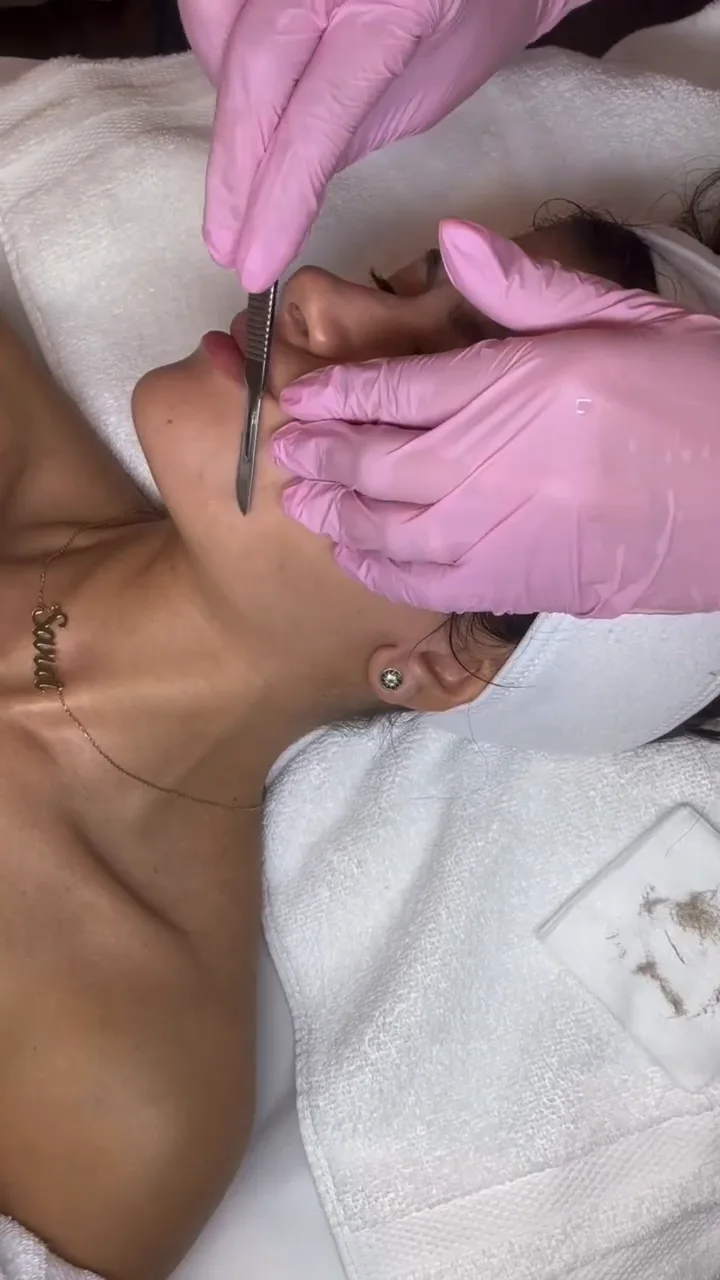
Dermaplaning is probably the treatment surrounded by the most half-truths, for an understandable reason: it involves a blade and a face, two words that, side by side, bring up all sorts of ideas. The reality is far less dramatic, and a good deal more precise.
It's a gentle mechanical exfoliation. Using a dedicated instrument, the skin's surface is carefully exfoliated, pass after pass. That action removes two things: the build-up of dead cells, and the fine hair on the surface. Everything else — what it gets credited with, what it gets blamed for — deserves to be taken one idea at a time.
Myth #1: “the fine hair grows back thicker”
No. Dermaplaning doesn't change the nature of the fine hair. The reason is mechanical and fits in one sentence: the technique removes what sits above the surface, it doesn't touch the root. And the root is what determines the thickness and colour of the hair that follows. What grows back grows back exactly as it was.
The opposite impression comes from a well-known illusion: a hair cut straight across ends bluntly, whereas a hair that has never been cut tapers at the tip. To the touch, the first feels coarser. It isn't.
Myth #2: “it's a hair removal method”
This follows directly from the point above. Since the technique doesn't touch the root, dermaplaning is nothing like a long-term hair removal method: it takes off the fine hair present at the time of the session, and that's it. If your goal is reducing hair over time, that's another conversation — and another treatment.
Removing the fine hair is a side effect here, not the point. The point is the surface: skin that is immediately smoother and more luminous, because one layer of dead cells fewer is skin that catches the light better.
Myth #3: “it does nothing a scrub wouldn't”
Two concrete differences. First: no chemical exfoliant is needed, the action is purely mechanical. That's what makes the treatment interesting for certain skins, and it's also why it generally involves no downtime.
The second is about what comes next. Without that layer of dead cells, what you apply afterwards reaches the skin instead of sitting on top of it. It's also why the treatment can be combined with other protocols depending on your goals — a combination decided at the consultation, not when you book online.
Myth #4: “it's harmless, so it's for everyone”
Dermaplaning suits most skin types looking for radiance. “Most” isn't “all”: some skin conditions mean waiting, or choosing something else. The consultation confirms the treatment is right for you, and if another one fits your goal better, we'll say so straight.
On hygiene, one point deserves saying plainly, because it's the one that worries people: the blade is sterile and single-use, never reused from one client to the next. This isn't a machine, it's a hand technique performed by a trained esthetician — and that's exactly why the technique matters.
What the session actually looks like
The skin is cleansed, then gently exfoliated with the dedicated instrument. Plan on about 30 to 45 minutes, cleansing included: it's a treatment that fits into a lunch break. It generally involves no downtime, you get on with your day on the way out, and sun protection is advised afterwards.
Many clients book it before an event; others fold it into their routine as regular maintenance. Both make sense, and nothing is sold upfront: we discuss it at the consultation, based on your goals.
If your complexion stays dull despite a good routine, if your texture catches to the touch, or if the fine hair shows the moment light hits it, dermaplaning is one of the possible answers — without being the only one. At a consultation at the clinic in Ahuntsic, we look at your skin, explain what the treatment removes and what it doesn't do, and confirm the price before we start. You leave with an answer, even if it's no. The treatment page details how a session runs and the aftercare advice; the price is on the Prices page.
This article explains a treatment in general terms. It does not replace a consultation: what suits your skin is decided with you, at the clinic. Results vary from person to person.