
Dermaplaning before an event: when to book it, and makeup afterwards
A wedding, a photo shoot, a big night: when to fit in dermaplaning, why to leave some margin, and what to know about makeup afterwards.
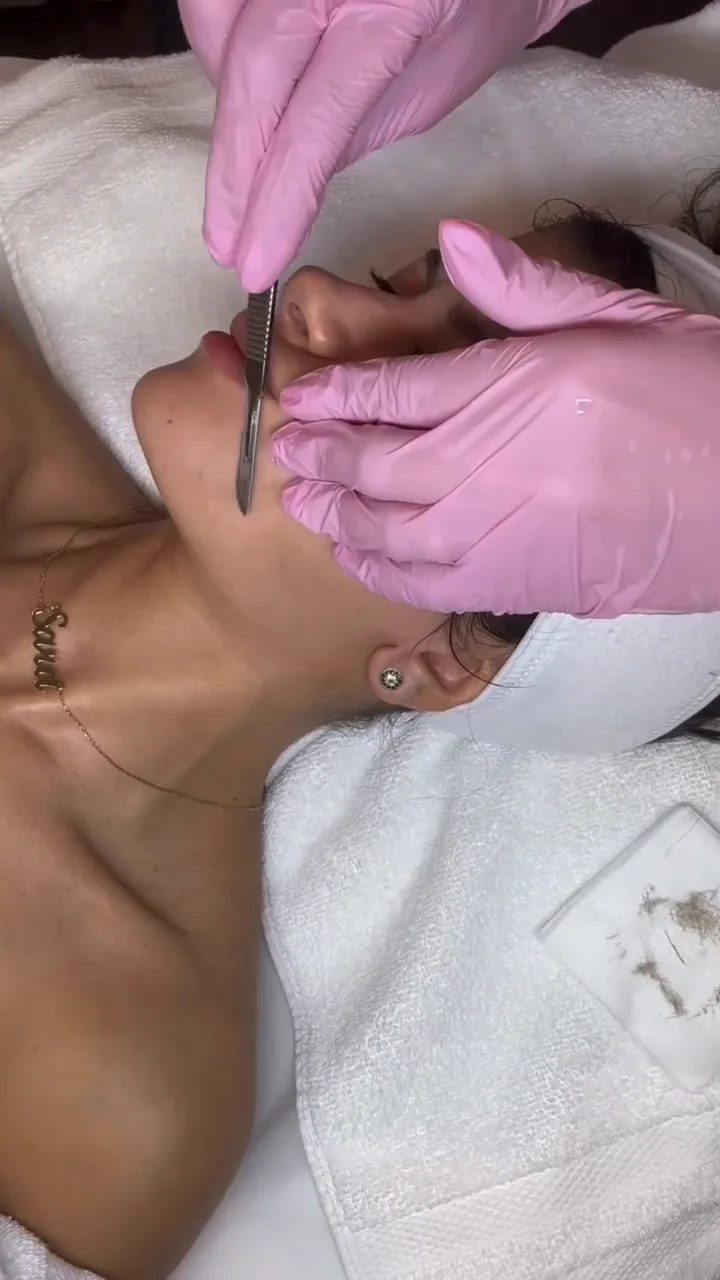
A wedding at the end of the month, a photo shoot, an evening when the cameras will be out. That's often when dermaplaning comes to mind, and the treatment page says so itself: many clients book it before an event. That leaves two questions we hear almost every time: when should you do it, and can you wear makeup afterwards?
Both answers come down to what the treatment does, and what it doesn't. Let's take them in order.
What the treatment changes for a big day
Dermaplaning is a gentle mechanical exfoliation. Using a dedicated instrument — a sterile single-use blade, never reused from one client to the next — the skin's surface is carefully exfoliated, pass after pass. That action removes two things: the build-up of dead cells and the fine hair on the surface.
Before an event, what shows is what matters, and the treatment page puts it plainly: skin that is immediately smoother and more luminous. One layer of dead cells fewer means a surface that reflects light better. The fine hair you noticed the moment the light hit it has come off with the exfoliation. As always, results vary from person to person.
When to do it: a few days before, not that morning
Since the effect on the surface is immediate, there's no point booking weeks ahead: the fine hair eventually grows back, exactly as it was, and dead cells build up again over time. On the other hand, the morning of the event leaves no margin at all. The treatment page talks about “an event in a few days”: that's the window most people aim for, and it makes sense.
Why leave a margin if the treatment generally involves no downtime? Precisely because of the word “generally”. It describes what happens for most people, not a promise about your own skin. A few days between the session and the event give you time to see how your skin responded, rather than finding out on the morning when everything needs to be ready. A few pointers for setting the date:
- Mention the event at the consultation: the session date is chosen around it, not around a gap in the calendar.
- If dermaplaning is combined with another protocol, the date is chosen for the whole plan: the other treatment has its own aftercare.
- If the event is outdoors, plan for sun protection: it's advised after the session anyway.
First session or regular: not the same timeline
Dermaplaning can be a one-off or regular maintenance, depending on your goals. If you already know it, you know how your skin responds, and the date can be discussed with more flexibility.
If it's your first time, the logic flips. A first session right before a big event means making two discoveries at once: the treatment, and your skin after it. One sensible option is to try dermaplaning when nothing is planned, then have it again in the days before the date. Something to discuss at the consultation: nothing is sold upfront.
And makeup, afterwards?
It's often the real question, and understandably so: the treatment page opens with this line, “Makeup catches, and your cream just sits on top.” Skin loaded with dead cells lets less of what you apply get through. Once that layer is gone, what you put on reaches the skin directly instead of sitting on the surface.
As for timing, the page is clear: the treatment generally involves no downtime, and you leave ready to put makeup back on. If you'd rather leave your skin alone until the next day, nothing stands in the way. And if you're unsure, ask at the end of the session: we'll answer by looking at your skin, that day.
Common sense does the rest. Since what you apply afterwards reaches the skin directly, it isn't the day to try a new foundation: stick with the ones your skin already knows. Clean brushes and sponges go without saying on a surface that has just been exfoliated. And the sun protection advised after the session belongs in your routine for those days, makeup or not.
What the consultation checks first
Dermaplaning suits most skin types looking for radiance. “Most” isn't “all”: some skin conditions mean waiting, or choosing something else. The consultation is there to confirm it for you and, ahead of an event, to check that the chosen date leaves enough margin.
It also puts the treatment in its proper place. If your goal is to reduce hair over time, dermaplaning isn't the answer: it removes the fine hair present on the day of the session, without touching the root. And if another treatment better fits what you want from that day, we'll tell you straight.
If a date is coming up and you're unsure about the right moment, that's exactly what a consultation at the clinic in Ahuntsic is for: looking at your skin, confirming that dermaplaning suits you, and placing the session where it serves your event. You leave with an answer, even if it's no. The dermaplaning page details how a session runs, how long it takes and the aftercare advice; the price is on the Prices page.
This article explains a treatment in general terms. It does not replace a consultation: what suits your skin is decided with you, at the clinic. Results vary from person to person.