
Photorejuvenation: redness, spots, radiance — what the light does and doesn't do
Redness, small spots, dull skin: what the Elite iQ™ light targets, what it doesn't do, and why the sun sets the calendar.
Concealer in the morning, a layer of foundation on top, and the same routine the next day. Redness on your cheeks or around your nose, a few small spots left behind by past summers, skin that looks dull in photos even on days when you're well rested: that's often what leads people to look up “photorejuvenation”. And the next question is almost always the same: what does it actually do?
Here's a straight answer, both ways: what the light targets, what it doesn't do, and what to know before booking at SHAY Esthétique, in Ahuntsic.
Pulsed light, laser: what we're talking about here
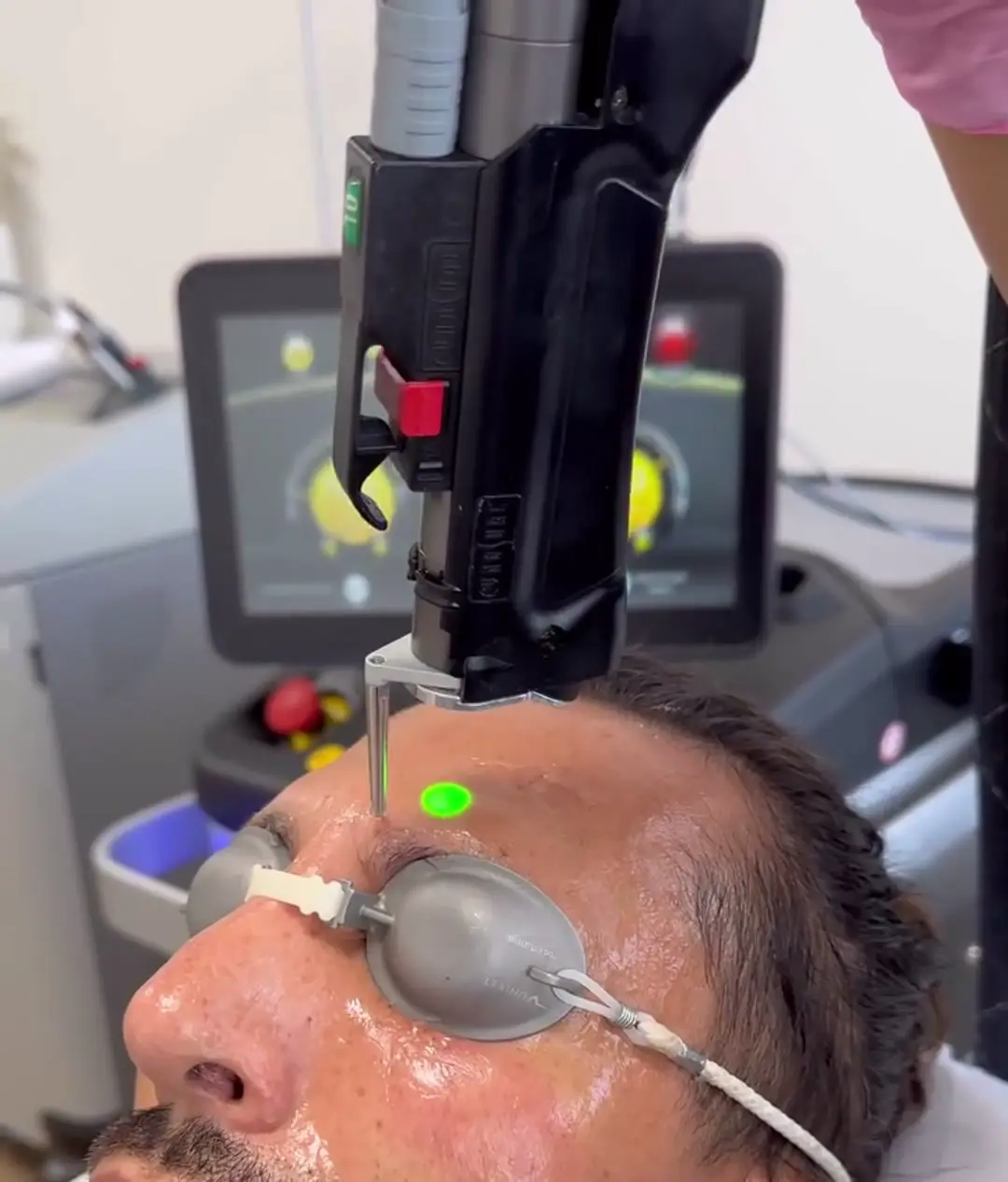
While looking into this treatment, you may have come across the terms “IPL” or “pulsed light”: they come up often around photorejuvenation. At the clinic, the treatment is done with light from the Cynosure Elite iQ™ laser. It's the same device used for laser hair removal, in the same room, but with different settings: here, we're not aiming at hair, we're aiming at your complexion.
The device works with two wavelengths, which lets the settings be adapted to your skin tone and the area being treated. Those settings aren't picked at random: they're set after an assessment of your skin, which also checks that the treatment is safe for you. In the end, the name of the technology matters less than two questions: what is the light aiming at, and is it set for your skin?
What the light targets
The principle fits in one sentence: the light selectively targets colour irregularities in the skin rather than the skin as a whole. It focuses on the darker areas, and on the redness you fix with a brush every morning. The treatment page lists it for four situations:
- Uneven tone that hasn't been even for a few summers now.
- Diffuse redness on the cheeks, the nose or around the nostrils.
- Small spots, darker than the rest of your complexion.
- A lack of radiance: skin that looks dull even when you're well rested.
The goal is a gradually more even and more luminous complexion. The key word is “gradually”: the change happens session after session, and it varies from person to person.
During the session, the sensation is often described as a brief warmth or a light elastic snap, and it's generally well tolerated. The device has built-in cooling, and settings are adjusted to your skin and your comfort throughout the session. Plan for about an hour, depending on the area.
What it doesn't do
This is the half of the answer you hear less often, and yet it's the half that avoids disappointment.
- It doesn't exfoliate. A peel works at the surface, through chemical exfoliation, and it's followed by a phase where the skin flakes; photorejuvenation works through light. They're two different treatments, not one better than the other.
- It doesn't do it all in one session. Several spaced-out sessions are often advised; the number is estimated at the consultation, based on your skin and the area, never promised in advance.
- It doesn't promise a specific result. We won't show you a before-and-after and promise you the same: results vary from person to person and are not guaranteed.
- It doesn't replace sun protection, which remains essential before, during and after treatments, and to maintain results.
- It doesn't diagnose anything. A spot that worries you should be shown to a doctor; the assessment is also there to rule out situations that call for medical advice rather than an aesthetic treatment.
After the session, and why the sun sets the calendar
Downtime is generally mild. Slight redness may appear and usually fades within a few hours; it's generally possible to get back to your day right away. You leave with precise instructions, and you'll know what to expect before booking rather than on your way out.
The real constraint lies elsewhere: the sun. You need to avoid sun exposure before and after the session, and it isn't a formality. Tanned skin means the session gets pushed back rather than done anyway. In summer, that takes some planning; in the fall and winter, when the days get shorter, it's often simpler. The time of year is chosen with you, at the consultation.
Who it's for, and when we say no
Photorejuvenation is for people who want a more even complexion. But some skin tones and some conditions call for extra caution with light, and some conditions can rule the treatment out. That's why the first appointment starts with a conversation: what bothers you about your complexion, your skin type, your questions, and your history.
If something points away from the treatment, we tell you, and we look at something else with you. The clinic also offers the TCA peel, for example: we point you to the right option based on what you want to change and how much downtime you can afford. As for the plan, it's set with you after the first session; no package is sold upfront.
If you're wondering whether photorejuvenation makes sense for your skin, that's exactly what a consultation at the clinic in Ahuntsic is for: looking at your complexion, checking that nothing rules the treatment out, and choosing the right time of year with you. You leave with an answer, even if it's no. The photorejuvenation page details the session and the precautions; the price is on the Prices page.
This article explains a treatment in general terms. It does not replace a consultation: what suits your skin is decided with you, at the clinic. Results vary from person to person.